
Research theme
Digital Identity
Insights, analysis, and commentary on digital identity, information technology law, and digital policy in Africa.
- Home
- Categorizing Risk and Harm in Digital ID
- Case Studies - COVID 19
- Kenyan ID - From Kipande to Huduma Namba
- Research Outputs
Home
As governments and private actors adopt digital ID technologies for service delivery, security, and inclusion, questions arise around privacy, data protection, accessibility, and human rights. CIPIT provides evidence-based research and policy guidance to ensure that digital ID systems are inclusive, secure, and rights-respecting.
CIPIT’s work in Digital ID sits at the intersection of law, technology, and public policy. The Centre conducts multidisciplinary research that:
-
Analyzes regulatory and governance frameworks governing digital identity systems in Africa.
-
Assesses risks and safeguards related to data protection, surveillance, and human rights.
-
Examines inclusivity and accessibility, ensuring marginalized groups are not excluded from identification systems.
-
Provides technical and policy advice to governments, civil society, and private sector actors on responsible digital ID implementation.
-
Facilitates multi-stakeholder dialogues, bridging academia, policy institutions, and technology developers to promote ethical digital identity practices.
Determining true risks and their impact to the user experience of Digital ID
Increasingly, with the introduction of DID programs in a number of African countries, citizens and residents have taken to social media to elaborate on some of their experiences of ID and interacting with ID systems. Albeit limited in scope and magnitude, these online reports of lived experiences provide a useful tool for assessing the impact of DID and identifying likely harms to which users may be exposed. Analysing social media narratives from 11 African countries, this report identifies, in descending order of gravity, three major categories of harms affecting users, as well as instances when the harms are most likely to manifest. These categorisations are proposed as a tool to assess the feasibility and proportionality of DID programs. Category One Harms are primarily associated with an inability to access foundational forms of ID. Category Two Harms on the other hand relate to users having the ID; its impact on constitutional rights, namely, the right to equality, privacy, and other human rights such as healthcare. The last category, Category Three Harms, deals with the harms occasioned by logistical/operational shortcomings such as clerical errors, long lines, etc. This report is guided by two main frameworks discussed below, the Principles for Evaluation set out by the Centre for Internet & Society (CIS) and the Omidyar Network’s Good ID principles.
Case Studies
Emerging Issues in Digital ID (PART III): Using Digital ID to Provide Social Assistance
Emerging Issues in Digital ID (PART I): Mobile Money During a Pandemic
Emerging Issues in Digital ID (PART II): Mobile Location Data to Trace & Monitor Covid-19 Cases
Emerging Issues in Digital ID (PART IV): Digital Signatures

Emerging Issues in Digital ID (PART V): Predictive Use Case: Using Digital ID for Vaccine Distribution
Kipande, Kitambulisho, Huduma Namba: The Violent Ontologies and Epistemologies of National Identity Systems in Kenya.
In 2019, the Government of Kenya through the Ministry of the Interior announced a new initiative called the Huduma Namba; a centralised, ‘single source of truth’ database that would determine the extent to which citizens would be able to access key government services.
However, the Huduma Number is the latest incarnation of the idea that a centralised register of persons is necessary to effective governance. It is designed to take precedence over the existing ID (kitambulisho) system, which has its origins in the pre-independence registration of African males in Kenya. But despite its stated confidence in its own system, the government launched the Huduma Number under a cloud of threats and coercion. Citizens were given 30 days to register for the new system and informed that failure to register would deprive them of access to banking, passports, mobile money, and even while, for instance, provision was not made for those in the diaspora. Eventually, this move raised suspicion as to the legality of this mandatory enrolment.
This paper will retraces the politics and history such centralised databases in Kenya beginning with the introduction of the kipande in colonial Kenya in 1921, through to the creation of the kitambulisho system at independence, including enrolment of women in 1978 and the modern digital database, through to the Huduma Namba itself. This critical genealogy will emphasise the reasons why the various systems were created, the ways they were expected to operate, and the political challenges they raised, as well as the extent to which these challenges were addressed. In this way, the paper argues that the fundamental flaws in Kenya’s identity systems are political and not technological and that the introduction of a digital database without addressing the political context may compound more problems than it solves.
This paper is currently under peer review.


Digital Rights in Focus: Navigating Kenya’s Maisha Namba Implementation Landscape

The Gender Equality Mirage: From Human Bias to AI Bias in Digital ID Systems in Africa

An Overview of the Digital ID system and the Unique Personal Identifier in Kenya
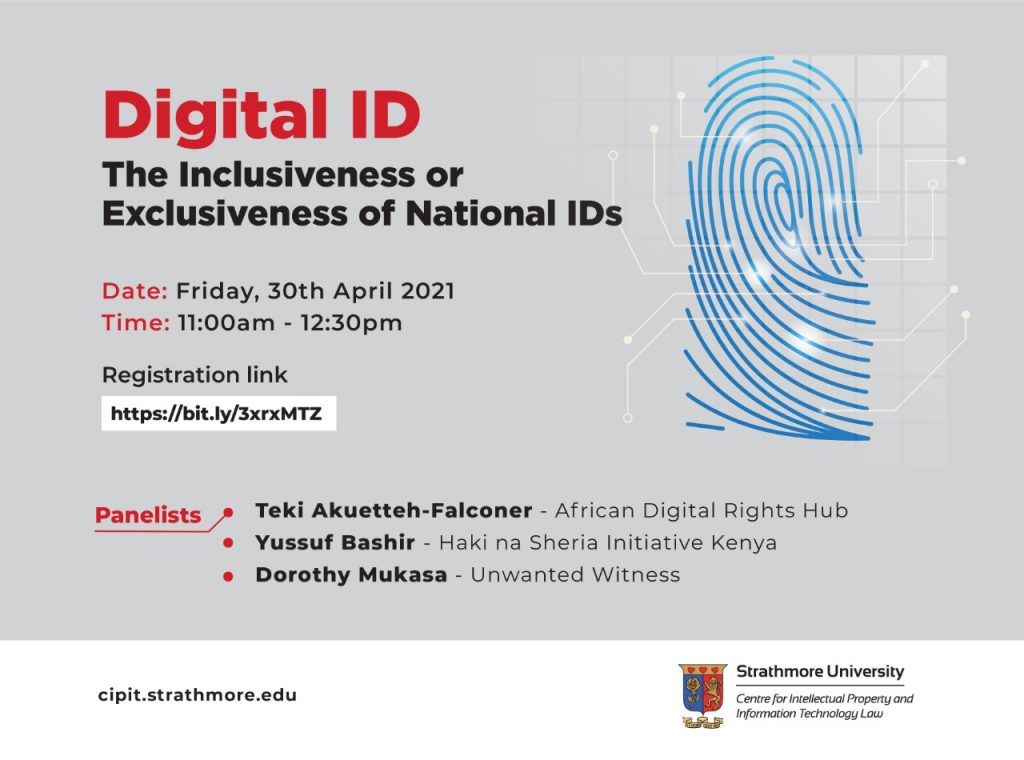
Inclusion and Exclusion: Reflections from the Digital ID Talk

Digital surveillance in health emergencies

The Draft Registration of Persons (NIIMS) Regulations 2020

HUDUMA NAMBA JUDGEMENT SUMMARY

Did we get Huduma Namba because of a simple mistake in Parliament?
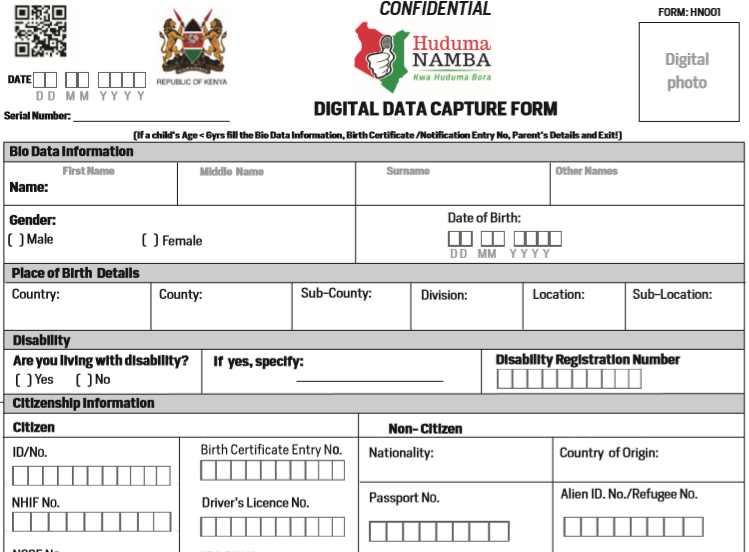
HUDUMA NAMBA BILL ANALYSIS
No results found matching your search criteria.
No results found matching your search criteria.
Digital ID publications
Reports, briefs and articles from our Digital ID work.
Digital ID
CIPIT · 2025
A Report on the Study of Government Digital Services and Digital ID in Kenya and Zambia Summary
Digital ID
CIPIT · 2025
A Report on the Study of Government Digital Services and Digital ID in Kenya and Zambia
Digital ID
CIPIT · 2024
Biometrics and Digital Identity: Trend Analysis and Comparative Assessment